

BMS History
Joe Durwin, the Home Historian, came out and did a bit of digging on the history of the BMS campus.
Summary
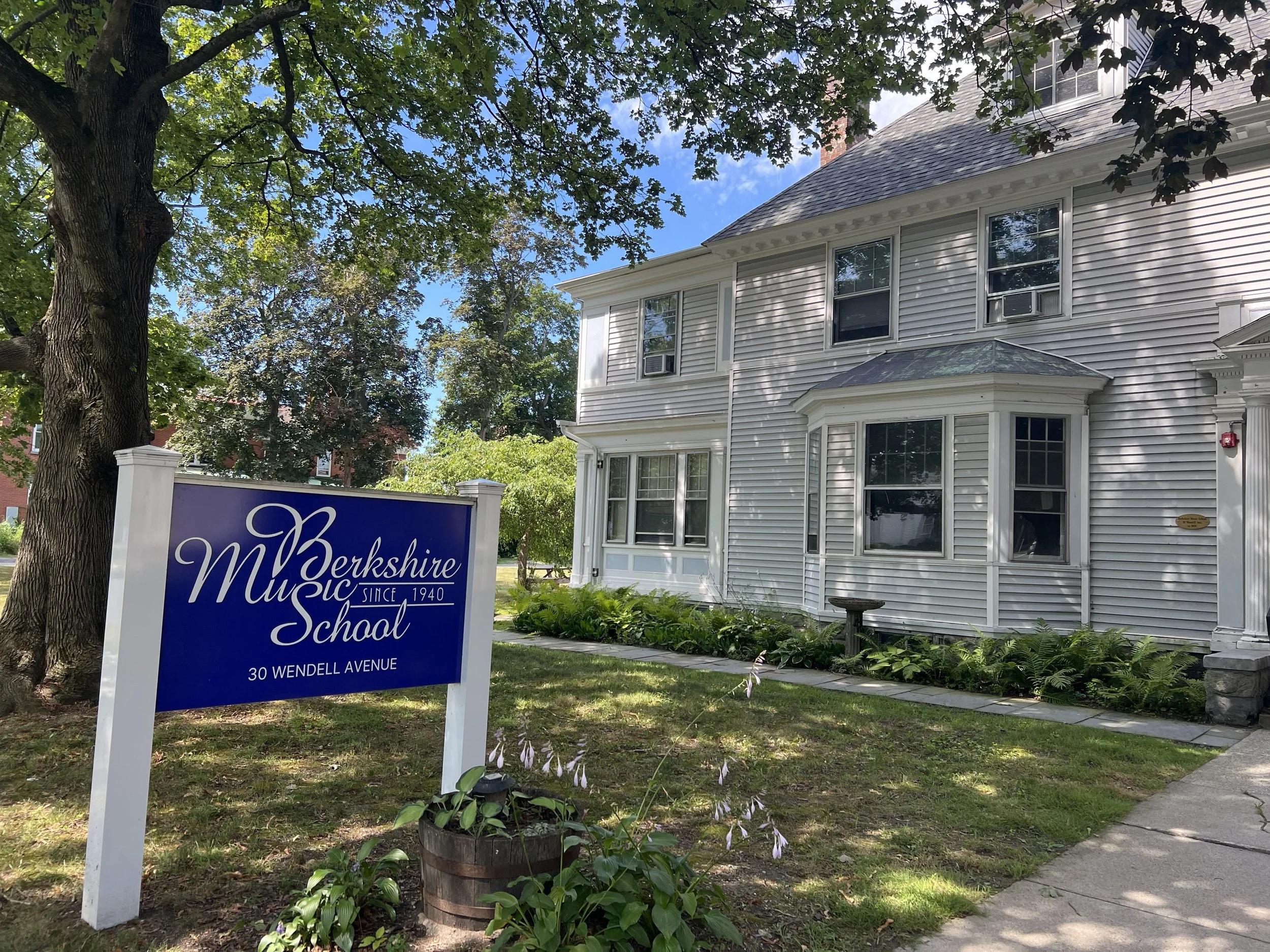
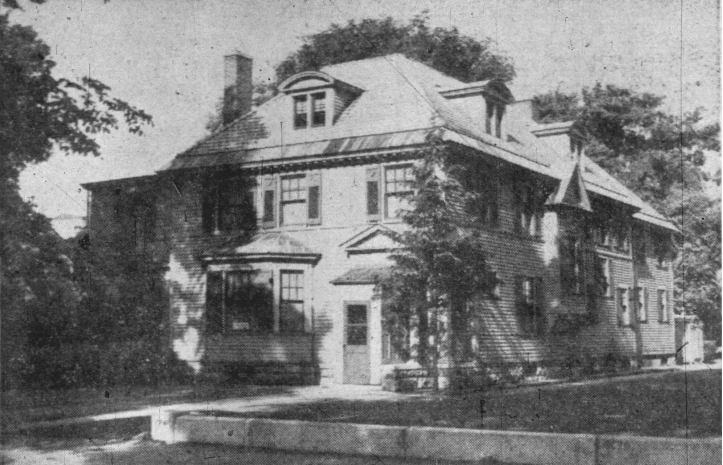
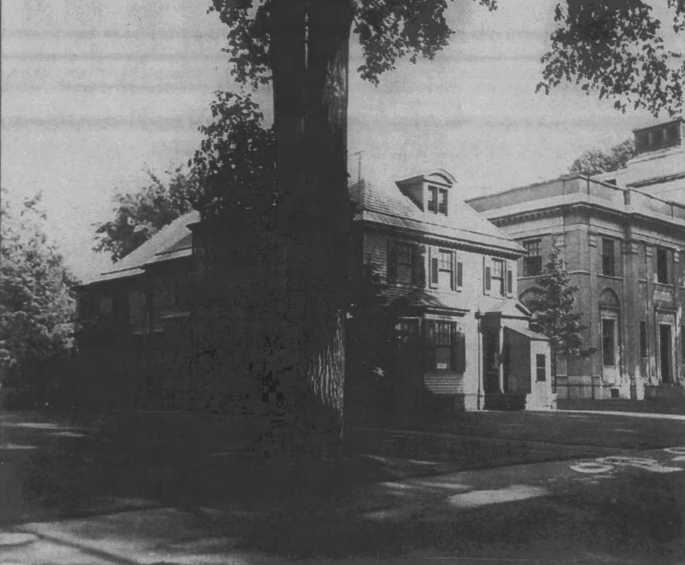
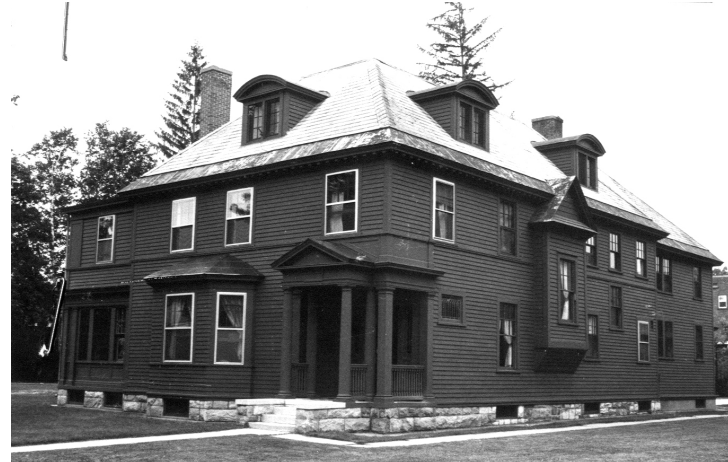
The Berkshire Music School property at 30 Wendell Avenue, Pittsfield was formerly the estate of Allen Bagg, one of Pittsfield’s most noteworthy mayors and civic figures of the early 20th century.
The oldest structural portions of the property began as barn & stables circa 1860s
Buildings on the premises were moved and significantly altered both in the 19th and early 20th centuries
The land parcel was previously owned by some significant figures in early Pittsfield history: John Chandler Williams, Robert Pomeroy, and Thomas Colt.
Pre-History
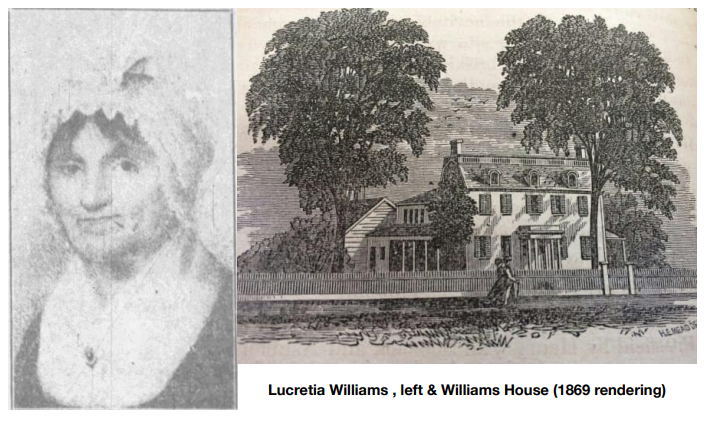
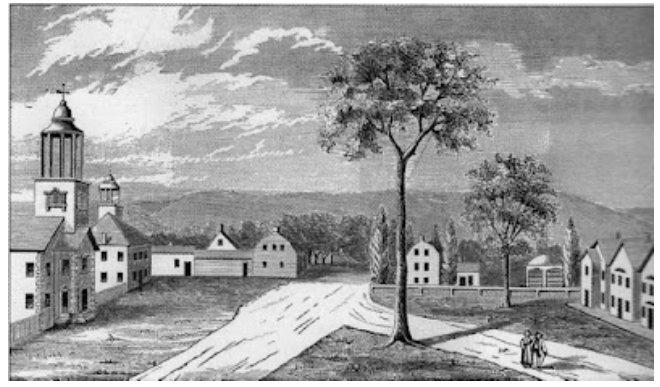
In the late 18th century, the land that now makes up the property was owned by John Chandler Williams and Lucretia Williams. They lived in a large gambrel-roofed home first started by Colonel James Easton, a Revolutionary-era tavern owner who planned the capture of Fort Ticonderoga. Easton sold the house to them in 1782. The following year, it was the scene of a massive party celebrating the Treaty of Paris. That house, which eventually became known as the Peace Party House, stood on what is now the location of the courthouse, and was moved to the site of the current Athenaeum in the 1870s. Lucretia Williams was also famous for protesting to save the Old Elm that once stood in Park Square, and by doing so created said town square, in the compromise that ensued.
There may have been some small farm outbuildings on the parcels that now make up the Berkshire Music School in the early 1800s, but if so none of that seems to be preserved as part of the current buildings. A comprehensive visual inspection showed no signs of timbers, nails, Lucretia Williams , left & Williams House (1869 rendering) or any other building materials that would be consistent with the early 19th century, even in the most untouched parts of the structures.
In late 1862, Robert Pomeroy purchased land south of what was once the John Chandler Williams house from E. Newton. Robert was the heir to the gun-making fortune of his father, Lemuel Pomeroy, and a prominent community leader. His daughter Mary Agnes married General William Francis Bartlett, of Civil War fame.
Pomeroy created a small lane coming off East Street to form the beginning of what’s now Wendell Ave. Originally, this was known as Williams Lane or Road, but changed to Wendell to avoid confusion with the other Williams Street (named after a different Williams).
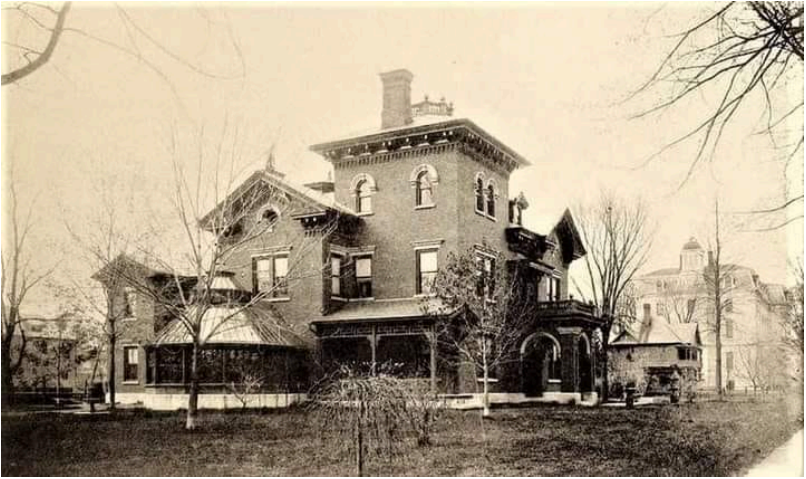
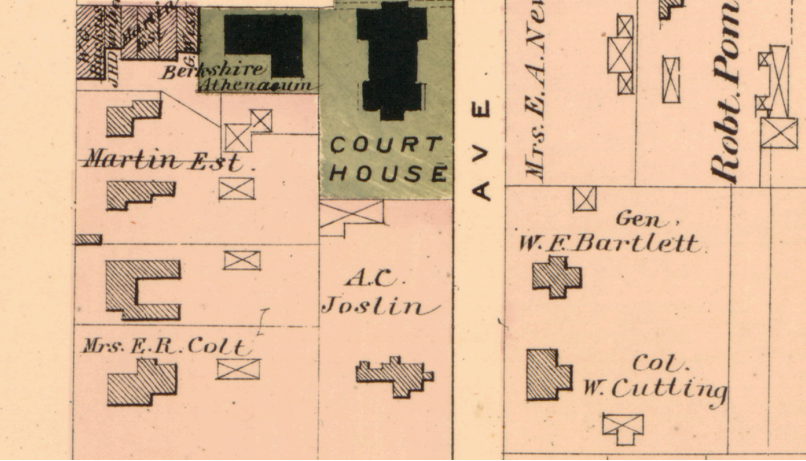
In 1863, Pomeroy sold a lot on this land to Thomas Colt. Colt bought additional land from David Campbell in 1865, and in early 1866 his home [42 Wendell] was built. North of his new home, he began building some outbuildings that would one day become part of Berkshire Music School.
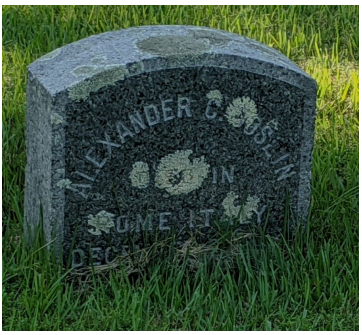
In 1874 the property was sold to Alexander C. Joslin, after Thomas Colt’s fortunes were greatly reduced by the economic depression of the 70s.
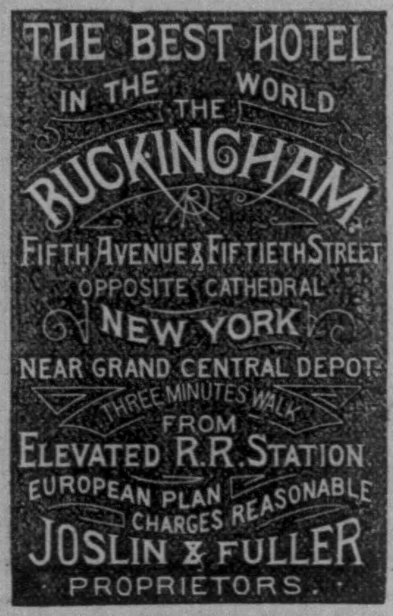
A.C. Joslin, about 55 at the time, had been in the Cincinnati hotel business, as owner of the Burnet House. Later he bought the Buckingham Hotel in NYC with a partner.
He and his wife Parmelia were known for the lavish Fourth of July parties and band concerts that they gave on the lawn. They had two adult children, William and Lizzie. They always had dogs on the property.
The name of whoever may have occupied quarters in the carriage barn does not seem to be recorded. Subsequent owner Allen Bagg would later recall of the Joslins, “No family in Pittsfield turned out a better or more up-to-date rig—with coachman and footman, and silverplated harnesses.”
They traveled extensively, and were in Italy when Alexander died suddenly in 1883. Parmelia lived there for several years after, before relocating to Paris.
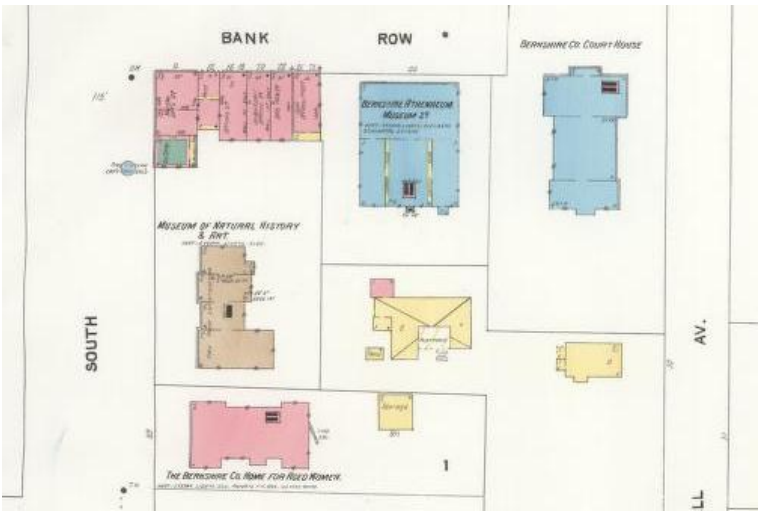
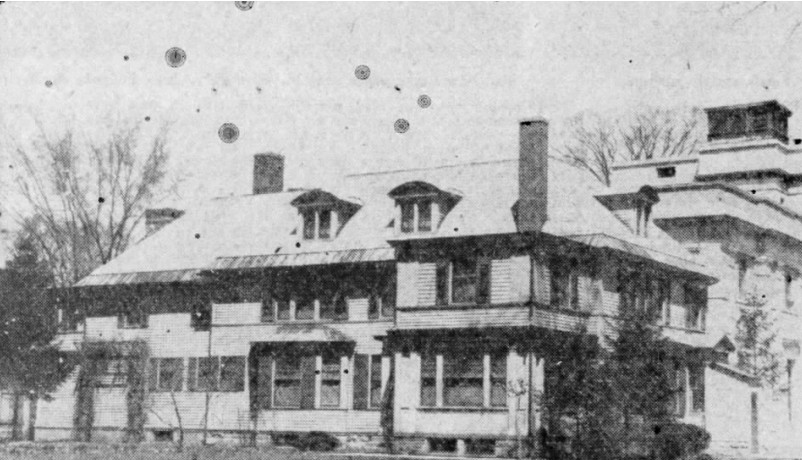
In 1901, Williamn Joslin sold the property to Mary Clapp. Mrs Clapp was the daughter of Calvin Martin, and had grown up nearby at a house located where the Berkshire Museum now stands. Mrs Clapp undertook a major renovation and modernization of the Colt house. It is at this time that the carriage house undergoes separation, with the barn/stable portion moved to a lot behind what was then the Athenaeum. The dwelling portion was significantly enlarged and improved, creating what is now the middle portion of the building. The addition on the south side was added at this time.
c. 1866
Colt had his barn and carriage house complex built sometime soon after, almost certainly in the late 1860s. They are mentioned explicitly in the sale advertisement in 1874, stating that they have been recently refurbished, suggesting they were at least a few years old. The oldest timbers still visible in the structure appear to probably date to around this time, with no indication of building materials older than that. (It remains unclear where the date of “1800” on a placard outside 30 Wendell Avenue comes from, and may have been speculation or legend picked up by someone in the early days of the music school.)
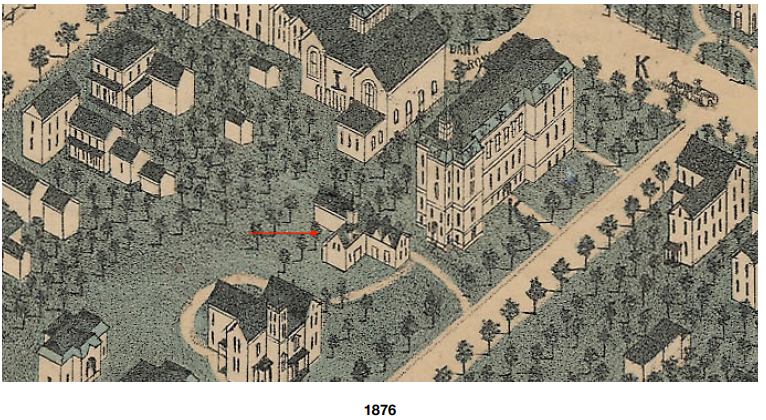
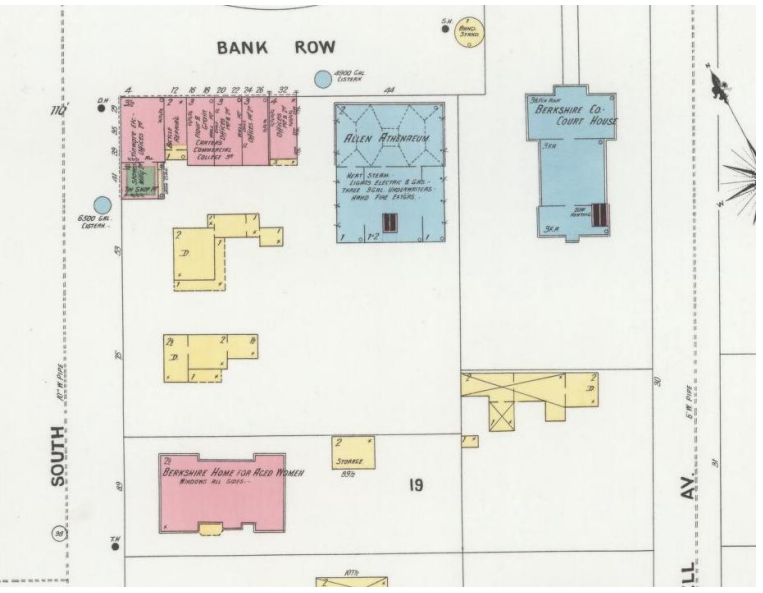
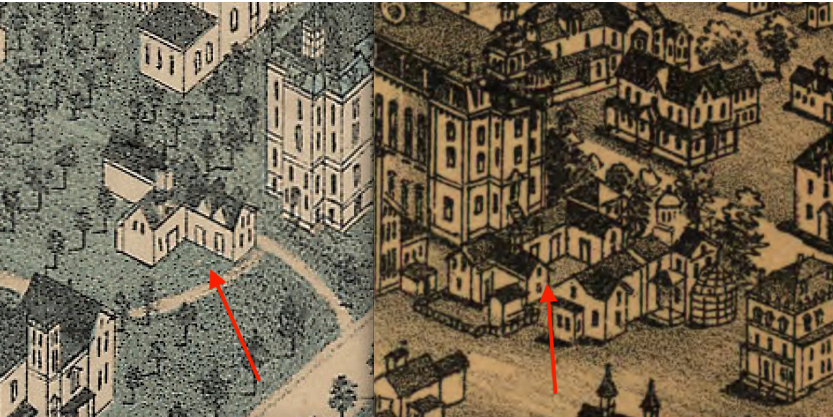
By 1876 the barn / carriage house structure can be seen in a panoramic map image of Pittsfield, along with a small front dwelling house for the coachman. This front portion represents part of what is now the main house/offices, while the rest is part of what has become the recital hall building. At that time, whole structure was located about where the Berkshire District Court building was later constructed, but further back from the street.
1900
1905
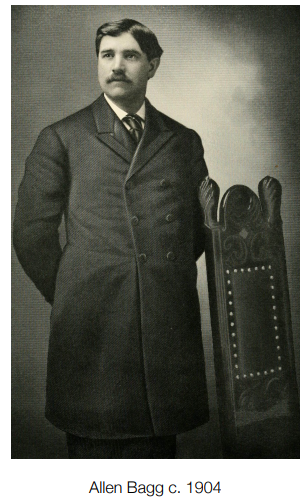
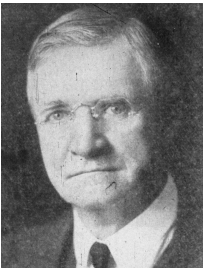
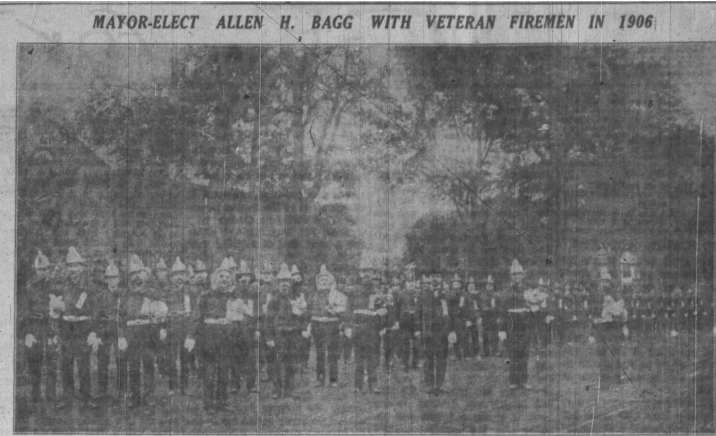
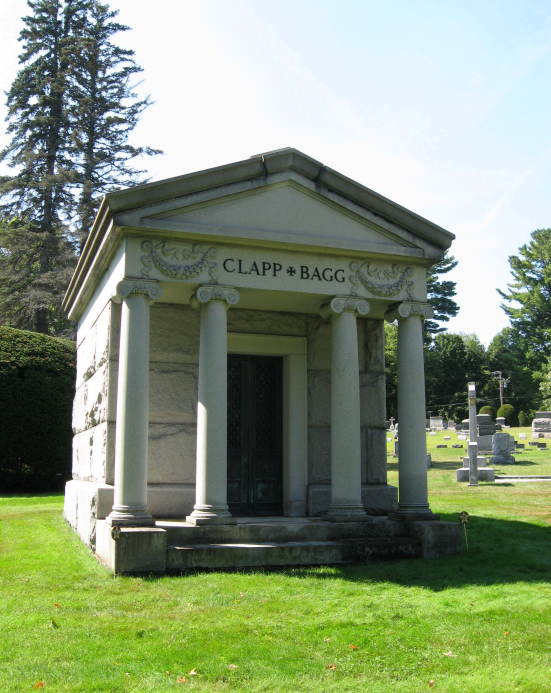
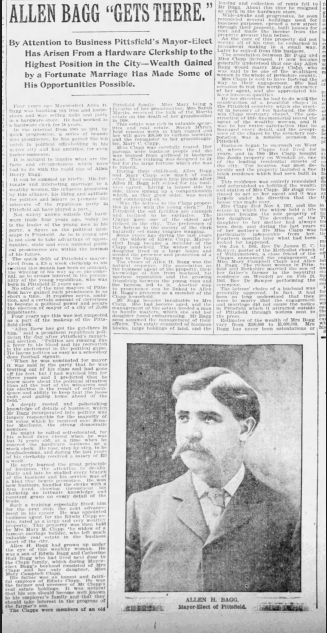
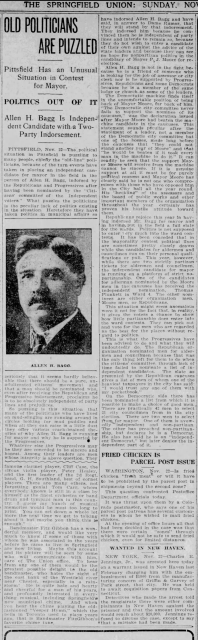
Mary Martin Clapp never lived in any part of the Wendell Ave estate, however. She died in 1901, while it was still undergoing renovation. The home passed to her daughter, Mary C. Clapp. Two years later, the younger Mary Clapp married Allen Bagg. He had grown up next to the family at their former residence, and his father had managed their farm. Allen quit school at 14 to work at a local hardware store as a clerk, but remained close with the family. When they took on the Joslin property, Bagg oversaw the changes and renovations for them. Mary Bagg was much wealthier and significantly older than him when they married in 1903. He had been a relatively unknown individual in town in 1900, but over the course of four years had risen rapidly into prominence in local politics. He ran for city council, then in 1904 he secured the Republican nomination for Mayor, and was elected to three consecutive 1 year terms.
The Baggs rented out 30 Wendell Avenue to a succession of tenants. The first appears to be F.W. Hibbard, and his new bride Grace Allen, married in June 1902. Frederic Walbridge Hibbard was the son of Pittsfield’s first mayor, Charles E. Hibbard, and brother Charles L would later become a judge. Frederic’s own promising legal career ended when he came down with appendicitis at the 30 Wendell home, and died at the House of Mercy. The Clifford Francis family quickly replaced them, in February 1903. Francis was a superintendent for P.W. Manufacturing, who lived there with his wife Mabel.
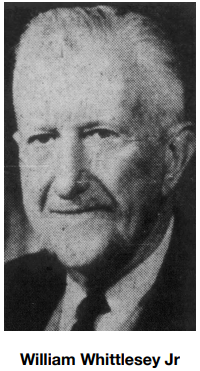
The next to lease it was Arthur W. Crenshaw. An engineer for the William Stanley company, he lived there from 1905 to 1906. After his brief tenure came William Whittlesey, Jr., and his wife Helen. William came to Pittsfield in 1887 with his father, a State senator who founded the Pittsfield Electric company that became Western Mass Electric Company. His whole family had political roots; William Jr’s grandfather and great uncle had both been U.S. Congressmen, and his mother Caroline was the niece of Samuel Tilden, U.S. presidential candidate (and popular vote winner) in 1876.
William had recently been elected to succeed his father running the electric company when he moved into 30 Wendell, and the following year married Helen Block, of St Louis. Helen was a classmate of William’s sister at Smith College, and the families had long been close.
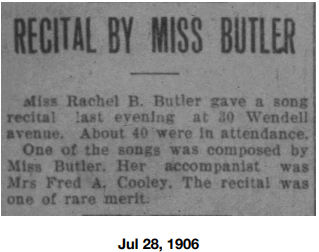
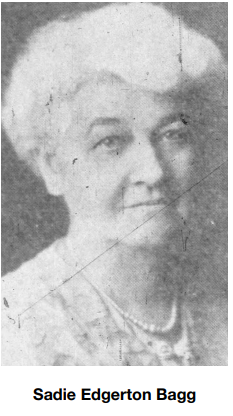
The 1910 census shows William and Helen lived there with one live-in servant, Annie Hynes. They continued to rent the home from the Baggs until 1915. In early 1915, the house next door at 42 Wendell was once again being renovated. The Baggs made $20,000 worth of renovations to the brick house, and they moved into 30 Wendell while it was being done. The cottage had recently been vacated by the Whittleseys, who moved into a new house on Crofut that year. As with the previous round of renovations, the lady of the house did not live long enough to enjoy them. In the summer of 1915 Mary Clapp Bagg developed an illness, and a year later she passed away at 42 Wendell, in July 1916. After her funeral was held there, Allen Bagg immediately relocated permanently to 30 Wendell Ave. In 1919 Allen Bagg was hospitalized for an illness, and began a relationship with his nurse there, Sadie Edgerton. Sadie was a widow who originally resided in New York. As the former (and future) mayor’s wife, she was a major patron of the House of Mercy. In February 1921, Allen’s mother died on the premises. Catherine Bagg, 87, had been staying with them during an illness of several months.
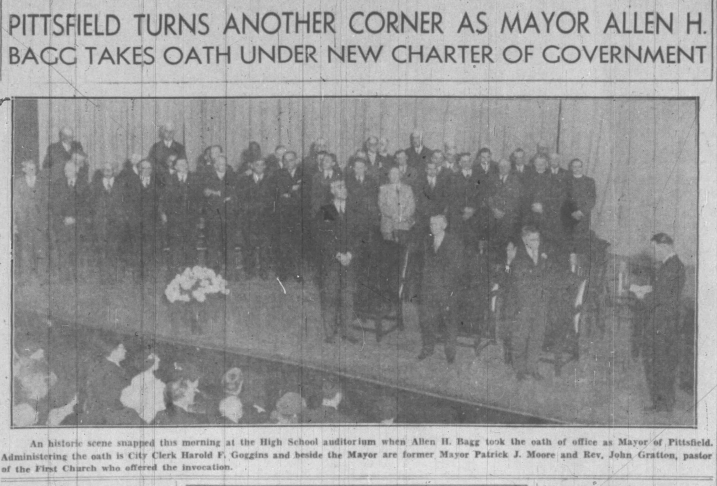
A variety of organizations and groups gathered at 30 Wendell Ave during the Bagg tenure: the Daughters of the American Revolution, the League of Women Voters, the Kings Daughters and Sons. The Pittsfield Visiting nurses association had their annual Christmas Party there for a number of years. In 1929, some 200 people came to the home for a card party to benefit the House of Mercy. Other events included the wedding of their niece, Elizabeth Bagg. On the evening of September 27, 1930, Elizabeth married Kenneth Abbott of Syracuse “in the large front living room, under an arch of autumn leaves and yellow chrysanthemums, with a background of palms and chrysanthemums.” The bride wore a gown of ivory satin. [See appendix for more details] In 1933, the year after Pittsfield voters approved a new city charter creating a 2-year term for mayor, Allen launched a renewed campaign for the office at a kickoff event held at the house. He was elected with a 52 percent share of the vote over former Mayor Patrick Moore.
As Mayor, Allen Bagg was considered a shrewd leader in fiscal matters. He also had a reputation as somewhat of a moral crusader. In 1907, he personally staked out a brothel operating on Melville Street, and participated in the eventual police raid. He once famously banned the Kay Francis film Dr Monica from local movie theaters; he also forbade carnivals and all games of chance, even for charitable purposes. Bagg was also a very active Rotarian, so much so that he served as the 3rd Vice President for the national Rotary organization.
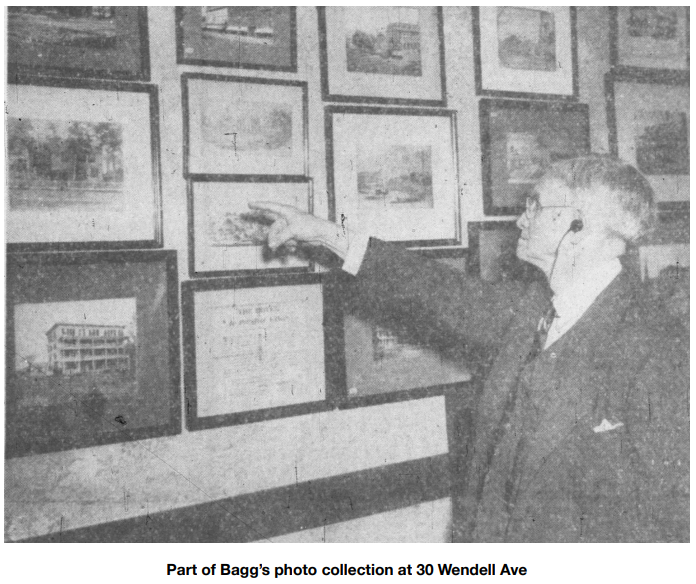
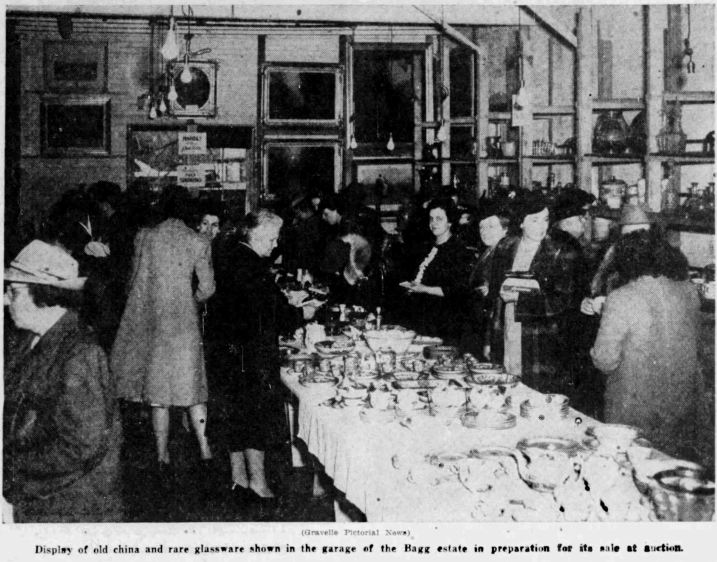
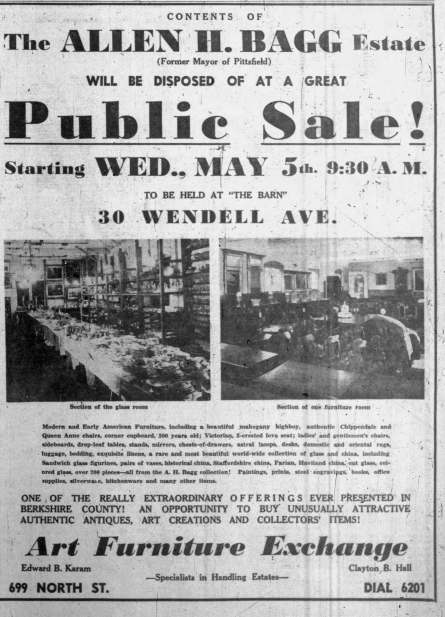
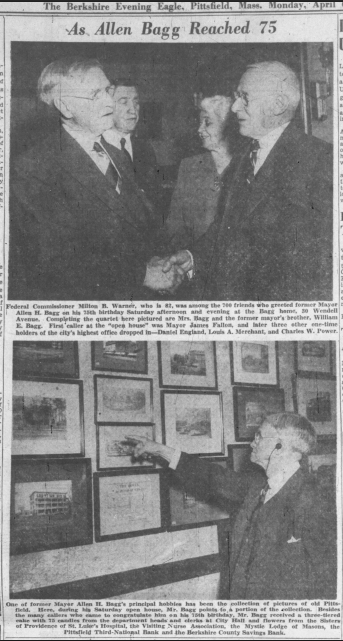
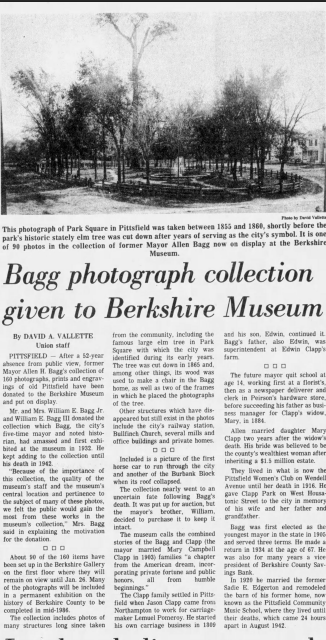
During Bagg’s tenure, the house was called “a treasure house” of interesting artifacts that the Baggs collected traveling all over the world. Bagg also had a substantial photo collection (later donated to the Berkshire Museum) of over 250 historical photos of Pittsfield, many of which adorned the walls of the house. The Baggs had various household staff that lived on the premises during their time of occupancy. The 1920 census lists Margaret Halpin, age 50. By 1930 it is two younger women, Mary Keane and Nora Cutin. In 1940, Jean Drummond and Mary Killian take on the role.
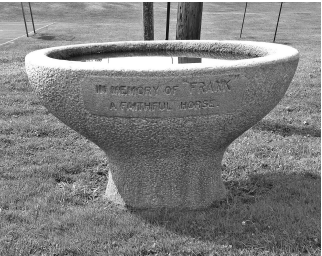
One resident of the stables that is still commemorated today is Frank, a beloved horse that lived on the property for a number of years. Frank was a retired fire-horse who pulled fire engines for years in the Cleveland Fire Department. He was bought by Mrs Edwin Clapp, who passed him on to her daughter Mrs Bagg. Every time the fire alarms blew nearby, Frank would still respond at attention. On at least three occasions, he broke free of the property on Wendell Ave and went running toward active fire calls. After his death, Mrs Part of Bagg’s photo collection at 30 Wendell Ave Bagg donated a watering-trough with his name in the 1910s, which still exists on the Clapp park land named for her relatives. It is inscribed “to Frank, a Faithful Horse.”
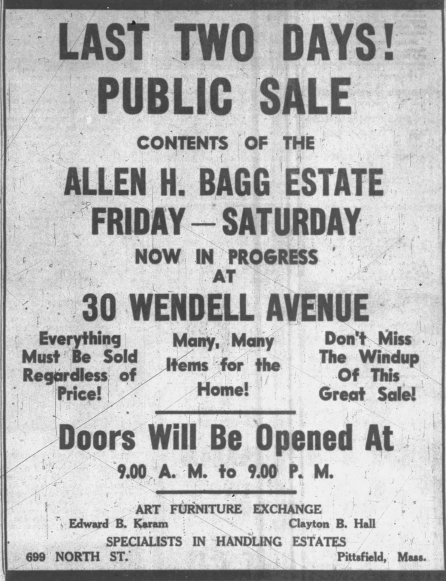
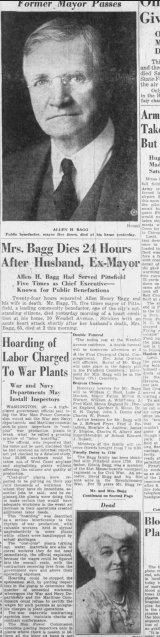
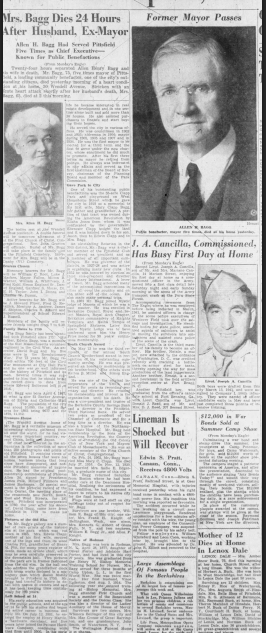
In April 1942, a 75th birthday party open house was held at the house for Allen Bagg. A three tiered cake with 75 candles was brought in. It was to be a kind of last hurrah for the Bagg estate. Allen had been in poor health on and off for the past couple years. Four months later, in August 1942, he passed away at the home. The following night, Mrs Bagg passed away there as well. The summer after their death, in June 1943.
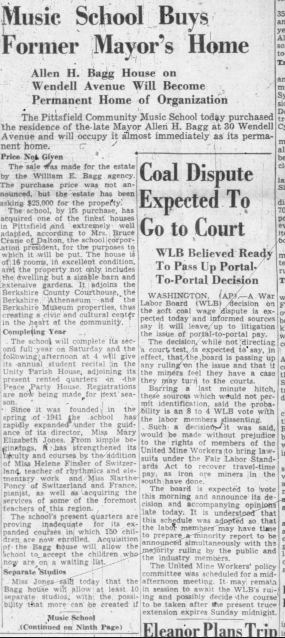
The home was purchased by the Pittsfield Music School [Berkshire Music School]. Today [2026], the music school continues to own and operate both the house and barn building as part of its campus.
Sources: Massachusetts, U.S., Town and Vital Records, 1620-1988; Registry of Deeds, Berkshire Middle District; City of Pittsfield- Assessors Records: City Directories - 1900-1916: History of Pittsfield, 1800-1876, J.E.A. Smith; “History of Pittsfield,” a paper presented by Allen H. Bagg at the Dedication of the Women’s Club of Pittsfield, September 16, 1937. Typed manuscript in collections of Berkshire County Historical Society; Berkshire Eagle: 6/18/1874; 7/2/1874; 10/25/1877; 6/3/1880; 10/17/1901; 11/05/1901; 11/20/1901; 7/27/1916; 9/29/1930; 7/3/1934; 9/17/1937; 8/18/1942; Pittsfield Sun: 6/5/1902; 1/8/1903; US Federal Census 1860-1940
MAPS: Map of Pittsfield, Woodford, 1855; Map of Berkshire County. Walling, 1858; Atlas of Berkshire County, Beers, 1876; Atlas of Berkshire County. Barnes and Farnham, 1904; Sanborn Fire Insurance Maps: Pittsfield, MA 1889/1900/1905; Map of Pittsfield. A. M. Van de Carr, 1899
Want to learn the history of your property? Reach out to Joe Durwin, the Home Historian. From his website: Home Historian provides comprehensive research to reconstruct the unique backstory of your residential or commercial property. Currently available in Berkshire County, MA, and some surrounding areas.